

If you care about getting customers from Google in 2025, you need to understand local SEO ranking factors inside out. Local SEO is no longer just “add your address to your website and hope for the best.” Google’s search algorithm for local search now blends hundreds of local ranking factors from your Google Business Profile to reviews, local citations, on-page content, behavior signals, and even how people interact with your business listing on Google Maps.

This guide is a practical, research-informed guide to local SEO ranking factors. We’ll break down how Google and other search engines like Google use these ranking signals, which ones matter most for local seo rankings, and how you can use tools like LocalRank.so to improve your local visibility without guessing.
By the end, you’ll know exactly what affects local search rankings in 2025 and what to prioritize if you want to rank higher in local results.
How Google’s Local Search Algorithm Thinks in 2025
When someone types a local search like “plumber near me,” “dentist in Seattle,” or “ABA therapy Vancouver,” Google’s ranking system doesn’t just show random results. It looks at three core local search ranking factors:
- Relevance – Does this local business match what the user is searching for?
- Distance – Is the business close enough to the user or to the location in the search query?
- Prominence – Does this business look reputable and well-known compared to other local companies?
Everything you do in local search engine optimization feeds into those three. Your Google Business Profile (GBP), website, reviews, citations, links, user behavior, and local business listings all act as inputs to help Google understand your business’s local relevance and trustworthiness.
In 2025, Google also leans heavily on entity understanding: it connects your GBP, website, local business directories, social profiles, local citations, and even offline signals into one “business entity.” The more consistent your business information is across the web, the stronger your local ranking factors become.
The Major Local SEO Ranking Factors (Big Picture Overview)
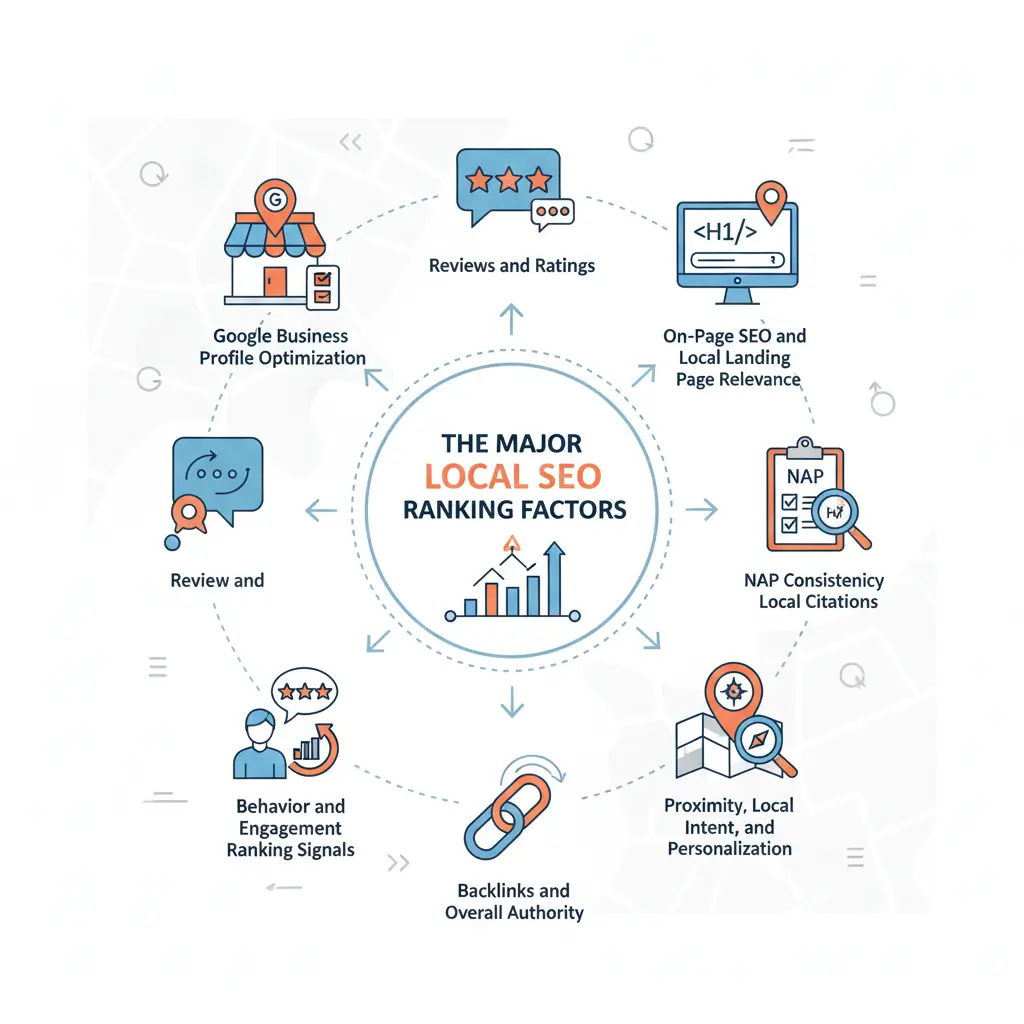
If you strip away all the noise, the most important local seo ranking factors fall into these buckets:
- Google Business Profile optimization
- Reviews and ratings (especially on Google)
- On-page SEO and local landing page relevance
- NAP consistency and local citations across local business listings
- Backlinks and overall authority
- Behavior and engagement ranking signals
- Proximity, local intent, and personalization
If you focus your seo efforts on those, you’ll hit the essential local seo signals that most heavily impact local visibility and search engine rankings.
Now let’s go through each in detail.
Google Business Profile: The Most Important Local Ranking Factor
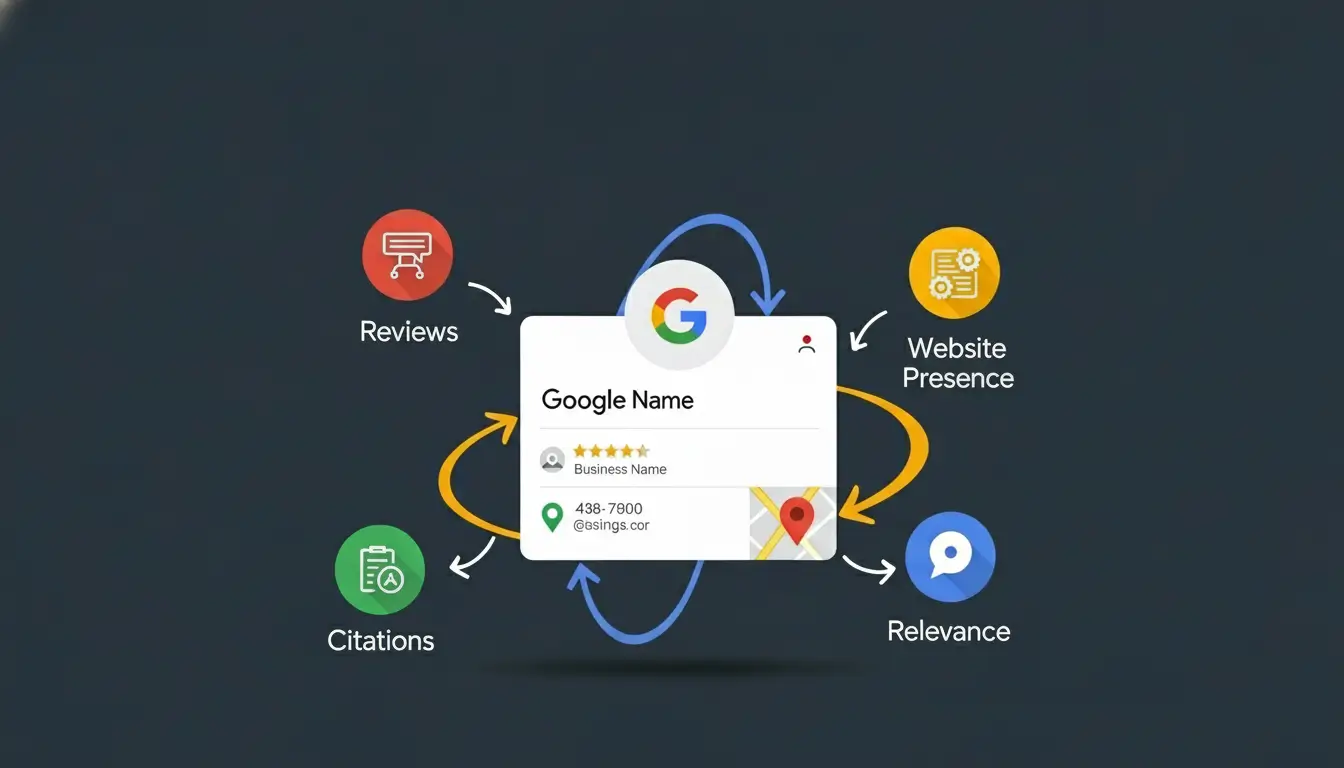
Your Google Business Profile (what used to be called Google My Business) is the center of gravity for local search. For the local pack, map ranking, and many local search results, GBP is often the single most important ranking factor.
Think of it as your mini-website inside Google’s ecosystem. It tells Google and search engines who you are, what you offer, where you’re located, and how users interact with you.
Key Google Business Profile Ranking Factors
These are the GBP elements that strongly affect local seo rankings:
- Primary category (massive ranking factor)
- Secondary categories
- Business name (exact-match brands have an edge, but name spam is risky)
- Address and service area
- Phone number
- Website / landing page URL
- Hours and holiday hours
- Attributes (e.g., “wheelchair accessible,” “women-owned”)
- Products and services
- Photos and videos
- Google reviews tied to the profile
- Posting frequency
- Q&A content and owner responses
Google uses this GBP data plus your website and citations to help search engines understand your entity and decide if you should appear in local search results.
Choosing the Right Category to Rank Higher in Local Search
Your primary category is one of the most powerful local search ranking factors you control. Choose it based on how users search, not just how you describe yourself.
Examples:
- “Emergency plumber” vs “Plumber”
- “Personal injury attorney” vs “Lawyer”
- “Orthodontist” vs “Dentist”
If your category doesn’t match search intent, your chances of ranking for profitable queries plummet.
This is where LocalRank.so is extremely useful: it can analyze top competitors in your local area and show which categories dominate for each keyword, so you can align your GBP with the actual ranking factors report that Google “prefers” in your niche.
How to Optimize Your Google Business Profile for SEO Success
If you want strong local ranking performance, make sure you:
- Fully verify your business
- Choose the correct primary category
- Add 2–5 relevant secondary categories
- Fill in services and products with clear descriptions
- Write a human, keyword-aware business description
- Upload real photos (interior, exterior, staff, products) and keep them fresh
- Add attributes relevant to how people filter and choose
- Set accurate business hours and keep them updated
- Use GBP Posts to promote offers, events, or content
- Make sure the website URL points to the most relevant landing page
A well-optimized GBP doesn’t just help Google uses your data more effectively; it also improves CTR, which feeds back into behavior-based ranking signals.
LocalRank.so can continuously audit GBP data across many locations, highlight missing fields, and track how GBP changes affect search rankings and map ranking across your city.
Reviews and Reputation: Local SEO Ranking Signals That Move the Needle
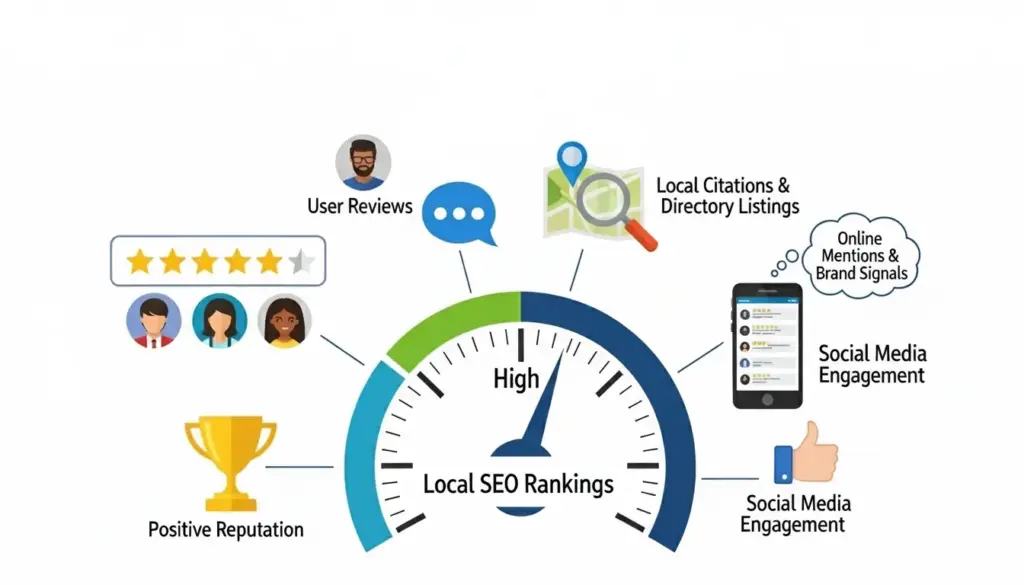
Reviews sit at the intersection of trust, conversion, and local search ranking. Users rely on them. Google’s ranking system relies on them. They’re one of the most visible and powerful local seo ranking factors.
How Reviews Affect Local Search Rankings
Google looks at multiple aspects of your reviews:
- Volume – total number of reviews
- Velocity – how consistently reviews come in
- Recency – how fresh they are
- Rating – average star rating
- Content – keywords, topics, and sentiment in review text
- Owner responses – whether and how you respond
- Distribution across platforms (Google, Yelp, vertical directories)
These feed into prominence-based local ranking factors and help Google decide if you’re a strong candidate for top local seo visibility.
Behavioral Review Metrics: Clicks and Dwell Time
On top of review text and scores, Google also tracks behavior, such as:
- Clicks to Call – taps on the phone icon
- Clicks for Directions – taps on the “Directions” button
- Clicks to Site – visits to your website from your GBP
- Dwell Time – how long people stick around after clicking
These interactions tell search engines use your business to satisfy local intent. If users click your listing and then call, get directions, or spend time on your website, those are strong local seo ranking signals.
How to Improve Local Reviews as a Ranking Factor
A simple, repeatable system will improve your local review profile:
- Ask for reviews after each successful service or visit
- Use email or SMS follow-ups with a direct link
- Encourage customers to mention what service they got and where (naturally, not forced)
- Respond to every review good or bad within 24–48 hours
- Avoid fake reviews or review gating (these can tank your profile and affect local seo badly)
LocalRank.so can help you track review count and recency across all locations, monitor sentiment, and tie review improvements to better search engine rankings in your local pack and local results.
On-Page SEO: A Core Ranking Factor for Local Search Rankings
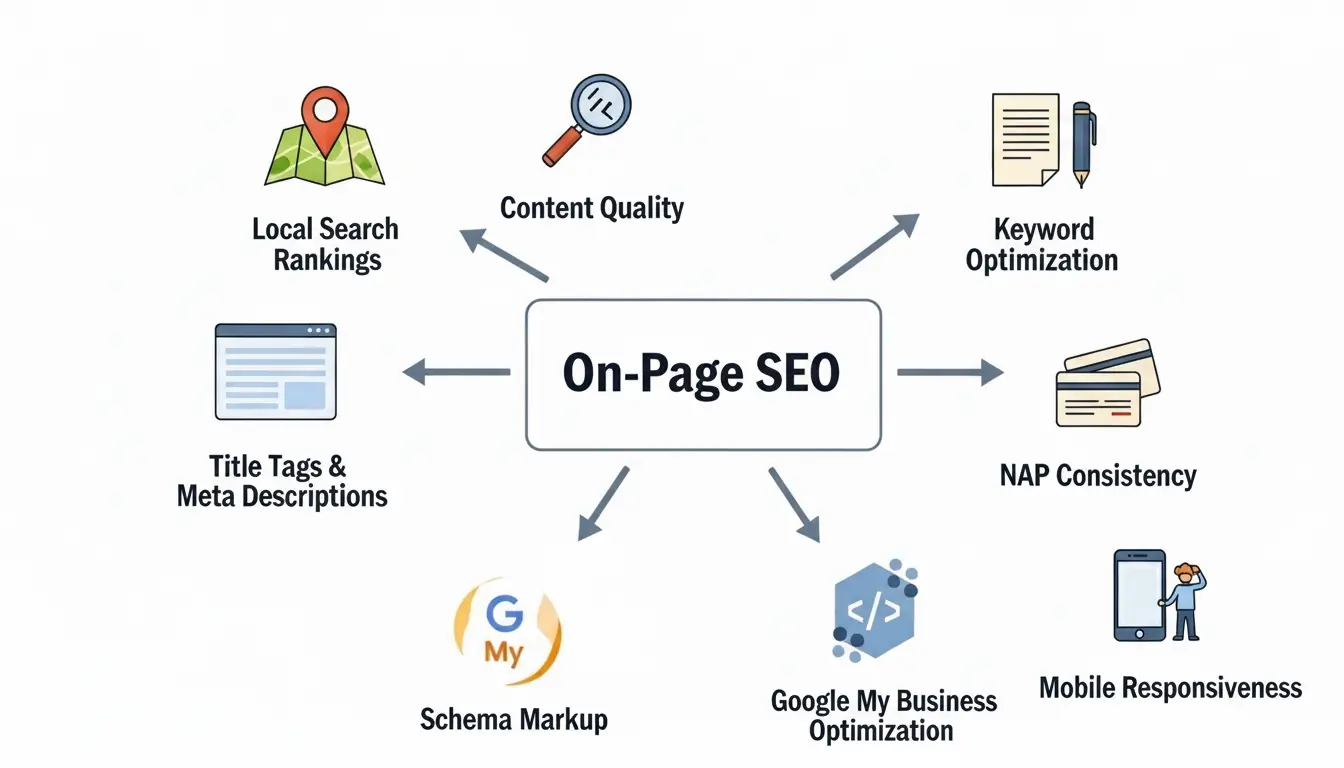
Even though local SEO focuses a lot on GBP and maps, your website still plays a huge role in local search ranking factors. Google needs your site to confirm your business information, understand your services, and validate your location relevance.
Key On-Page SEO Ranking Factors for Local SEO Rankings
On your main local landing page (or location page), you want:
- A clear H1 that reflects your main local keyword, e.g., “ABA Therapy in Vancouver – [Brand]”
- Title tag with service + city (critical for search engine optimization)
- Meta description that drives clicks
- Localized headings and content (mention city, neighborhood, region)
- Embedded Google Map of your location
- NAP (Name, Address, Phone) on the page
- LocalBusiness schema to help search engines understand your entity
- Mobile-friendly design and fast load times (important for local customers on phones)
- Internal links from relevant service pages
Good on-page seo is still one of the important ranking factors for both organic and local seo rankings.
Local Landing Pages for Multi-Location Businesses
If you have multiple locations, you should create unique landing pages for each. Each page should:
- Target its own local search terms
- Highlight specific neighborhoods or areas
- Include location-specific testimonials
- Show localized photos if possible
- Include directions and parking info
- Link to and from your GBP for that location
This helps you rank higher in local search for each city or service area, instead of confusing Google with one generic page.
LocalRank.so can audit your landing page for H1 use, schema, URL consistency, and map ranking connection (matching GBP and embedded google map) so you can quickly fix weak spots.
NAP Consistency, Local Citations, and Business Listings
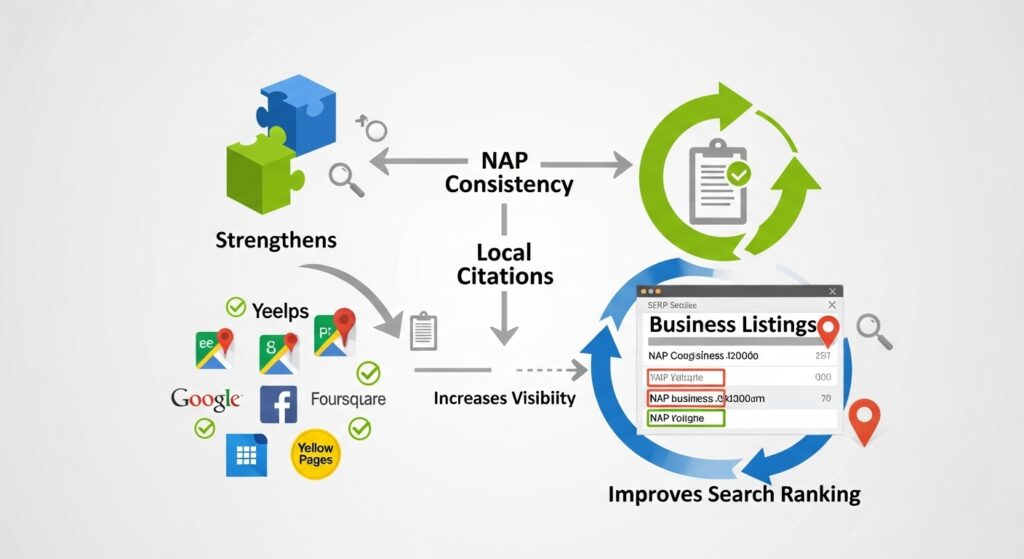
Local citations mentions of your name, address, and phone number (NAP) are still crucial local search ranking factors, even if they’re not as dominant as they used to be. They help search engines like Google verify that your business exists where you say it does.
What Are Local Citations and Why Do They Matter?
A local citation is any mention of your:
- Business name
- Address
- Phone number
- Website
on local business directories, mapping platforms, and niche sites (e.g., Yelp, Yellow Pages, BBB, industry portals).
Citations affect local ranking because they:
- Confirm the accuracy of your business information
- Signal that you are a legitimate local business
- Contribute to prominence and authority
- Help Google cross check entity data
NAP Consistency as a Local Ranking Factor
If your business is listed as:
“Smile Dental Clinic” at “123 Main St Suite 200” on one site
“Smile Dental” at “123 Main Street Ste 2” on another
and with different phone numbers elsewhere…
Google starts to doubt whether all those listings refer to the same entity. This weakens your local search ranking signals and can hurt both your local results and map visibility.
Consistent NAP across your website, GBP, and local business listings is a crucial for local SEO.
LocalRank.so helps you push consistent NAP info to reputable local directories and check whether your directories and local citations are accurate and indexed.
Backlinks, Authority, and Local Ranking Factors
While global SEO often focuses on acquiring large volumes of backlinks, local seo rankings benefit more from high-quality, relevant, local area links. Google evaluates backlinks not only for authority but also for relevance to your local business, your industry, and your geography.
Backlinks are still one of the strongest ranking factors in traditional search engine optimization, and they absolutely influence local search rankings as part of your prominence score. The more trusted websites in your local search engine ecosystem that talk about you, the more confidence Google has that you are reputable and should appear in local search results.
Types of Backlinks That Improve Local SEO Ranking Factors
Geo-Relevant Backlinks
Links from churches, schools, local charities, local influencers, and local media tell Google your business is a real part of the community. These are some of the strongest local ranking factors for increasing prominence.
Local Editorial Mentions
When local newspapers or blogs reference your brand, this reinforces your entity and helps search engines understand your importance. Editorial trust is a major ranking factor because Google heavily values reputation signals.
Industry-Relevant Links
Websites within your niche (e.g., dental associations, ABA therapy directories, HVAC trade groups) reinforce relevance. Relevance + authority = stronger local seo ranking factors.
Supplier & Partner Links
If you work with brands, manufacturers, wholesalers, or partnerships, request they add your business listing to their website. These are often overlooked high-authority links.
Local Business Directories
While not as strong as editorial links, citations from local business directories still contribute to authority and NAP consistency.
These backlinks help search engines like Google connect your site to relevant queries and strengthen your entity profile. This leads to stronger local ranking positions, which you can track in tools such as LocalRank.so via geo-grid map ranking data.
Behavioral Signals: The Hidden Local SEO Ranking Factors Google Won’t Admit

One of the most misunderstood components of local seo ranking factors is behavioral data. Google will never tell us exactly how these signals affect rankings, but enormous real-world testing shows that user engagement matters.
After all, Google wants to promote businesses users choose, trust, and interact with.
Behavioral Ranking Signals You Must Optimize For
Click Through Rate (CTR)
If people consistently click your local business listing more than competitors, this improves relevance and prominence. CTR is one of the strongest behavior-driven ranking signals.
Clicks to Call
A huge part of local intent. If users click the “Call” button, this shows Google that your local business satisfies the search intent.
Clicks for Directions
This is arguably the strongest engagement signal. When users click for directions, Google sees strong commercial intent.
Clicks to Site
If users frequently click to your website from your GBP listing, that demonstrates interest and trust.
Dwell Time
Once users land on your site, how long they stay matters. Your landing page must satisfy local intent, clearly answer questions, and load fast.
Photo Interactions
Google tracks how often people interact with your photos, and photo quality is becoming a more important local seo ranking signal.
How to Improve Behavioral Ranking Factors
Improve Photos & Visuals
Image quality directly affects CTR and engagement. Real, bright, well-composed photos can boost interaction drastically.
Improve Your GBP Description
A compelling description affects whether users click your listing.
Add Attributes and Services
These increase the relevance match for different search queries, improving visibility.
Use Offers and Promotions in GBP Posts
These increase CTR and repeat visibility.
Improve Website UX
Fast, mobile-friendly pages reduce bounce rate and increase dwell time.
LocalRank.so helps you monitor these improvements by showing geo grid search rankings, before and after comparisons, and keyword level shifts in your local ranking footprint.
Proximity, Personalization, and Context: The Uncontrollable Local Ranking Factors
Some local search ranking factors you cannot change directly but you can optimize around them.
Proximity (Distance) Ranking Factor
Proximity is often the single strongest local seo ranking factor. If your business is physically close to the user, especially on mobile, Google is more likely to show your business listing.
This is why two people standing 10 blocks apart often see different local search results for the same query.
Service-area businesses have a slightly different model: Google uses a centroid-based logic instead of a storefront location.
Even though you can’t “change” distance, you can overcome proximity disadvantages through:
- Stronger categories
- Better reviews
- Higher prominence
- Strong on-page seo
- More authority signals
LocalRank.so’s geo-grid map ranking shows exactly where you rank weakly across your service radius.
Personalization Ranking Factors
Google personalizes results using:
- Search history
- Device type
- Previously chosen businesses
- Location patterns
- Brand queries
So two users searching “dentist” may see completely different local search engine optimization outcomes.
Contextual Local Ranking Signals
- Time of day
- Busy/slow hours
- Competitor popularity
- Real-world foot traffic
- Local events
- Seasonality
These factors relate to Google’s predictive modeling of user behavior.
Local SEO vs Traditional SEO Ranking Factors (And How They Work Together)
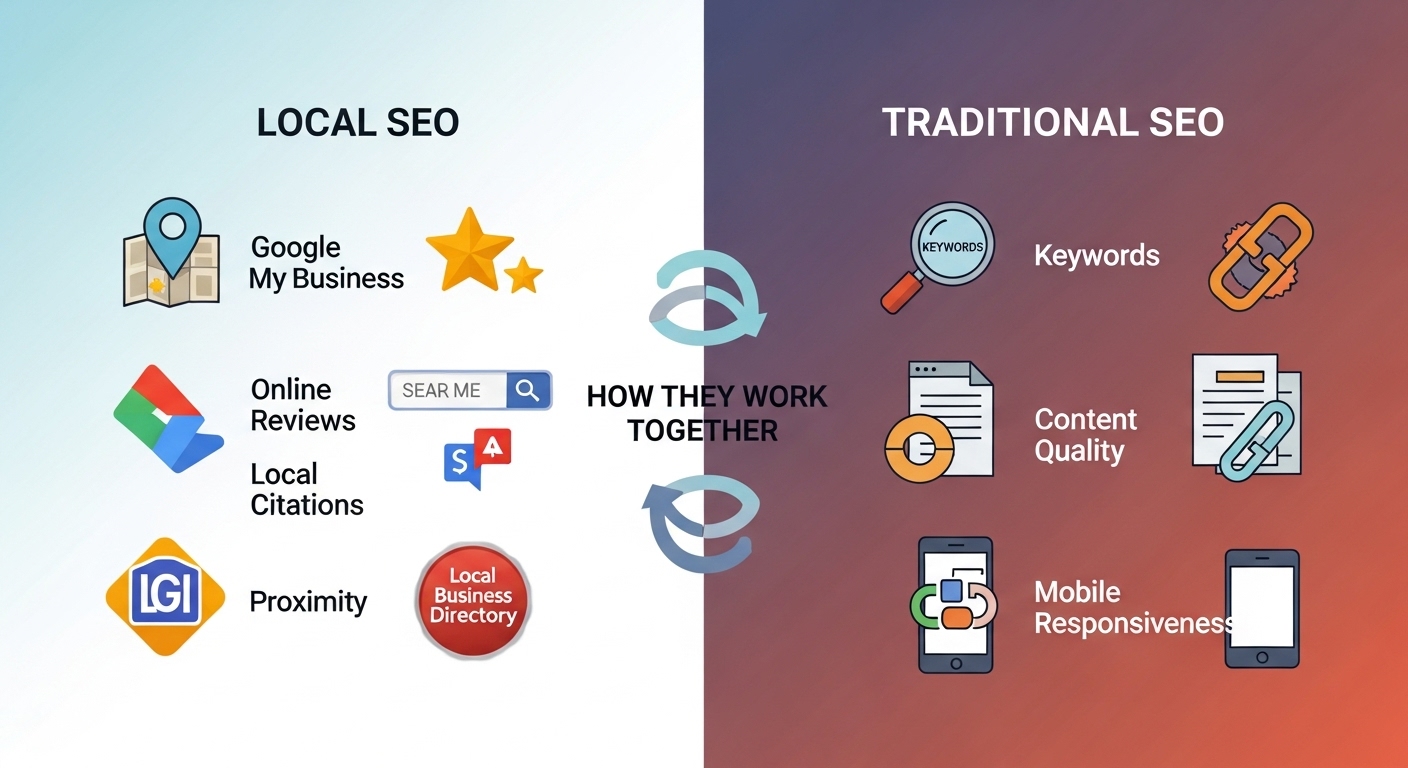
Traditional SEO focuses on:
- Technical SEO
- Site architecture
- Content depth
- Keywords
- Backlinks
- Page speed
- E-E-A-T
Local SEO ranking factors include:
- Google Business Profile
- Reviews
- Local citations
- Local intent
- Proximity
- Behavior signals
- Local authority
- Landing page relevance
The strongest local performers pair strong search engine optimization with strong local search engine optimisation.
- If your website is weak, you’ll struggle in organic results.
- If your GBP is weak, you’ll struggle in maps.
- If both are strong, you dominate local search rankings.
Advanced Local SEO Ranking Factors for 2025
In 2025, several advanced signals influence local seo rankings far more than before.
Entity Consistency
Google analyzes how consistent your entity is across GBP, website, citations, directories, review sites, and social media.
Matching:
- Name
- Address
- Phone
- Categories
- Descriptions
- URLs
- Schema
→ creates a strong entity.
Mismatch → weak entity → weak local search ranking.
LocalBusiness Schema
Schema markup is a major ranking factor for clarity. Google uses schema to connect your business with:
- Services offered
- Service area
- Hours
- Contact info
- Coordinates
- Pricing
- Reviews
Review Topic Extraction
Google now evaluates semantic topics inside reviews. Example:
“best emergency plumber in Houston”
“ABA therapy for autism in Burnaby”
“dentist good with kids”
This affects your local seo ranking signals.
High-Quality Media
Google prefers high-resolution, real-world images that show your brand accurately. Pixelated or stock image spam hurts engagement.
Local Authority Scoring
Google increasingly evaluates:
- Supporting local news coverage
- Local sponsorships
- Nonprofit involvement
- Local citations from authoritative directories
- Local PR
These improve prominence-based search rankings.
Geo-Grid Ranking Variability
Your visibility can change block-to-block. You might rank #2 near your store but #17 five blocks away.
LocalRank.so visualizes this in local heatmaps to help you optimize strategically.
How to Improve Your Local SEO Ranking Factors (2025 Checklist)
Here is the seo checklist for dominating local search:
Google Business Profile Checklist
- Optimize primary category
- Add relevant secondary categories
- Add every service
- Post weekly
- Upload high-quality photos
- Respond to all reviews
- Use attributes
- Fix hours
- Match website NAP exactly
- Add a strong description
- Ensure URL → correct landing page
Website & On-Page SEO Checklist
- Add service + city in the H1
- Use localized headings
- Add LocalBusiness schema
- Embed a google map
- Improve mobile speed
- Add internal links
- Write city-specific content
- Highlight neighborhoods
- Include local FAQs
Local Citations Checklist
- Audit citations
- Fix inconsistent NAP
- Submit to core directories
- Update niche directories
- Index your top citations
- Ensure high-authority citations (BBB, Yelp, YP, local Chamber)
Review Strategy Checklist
- Automate review requests
- Ask for contextual detail
- Respond fast
- Encourage photo reviews
- Handle negative reviews gracefully
Link Building Checklist
- Sponsor local teams
- Get listed on partner sites
- Reach out to local blogs
- Send PR to local news
- Create link-worthy local guides
Behavioral Optimization Checklist
- Improve photos
- Add offers
- Improve website speed
- Simplify navigation
- Add local CTAs
- Enhance your GBP description